

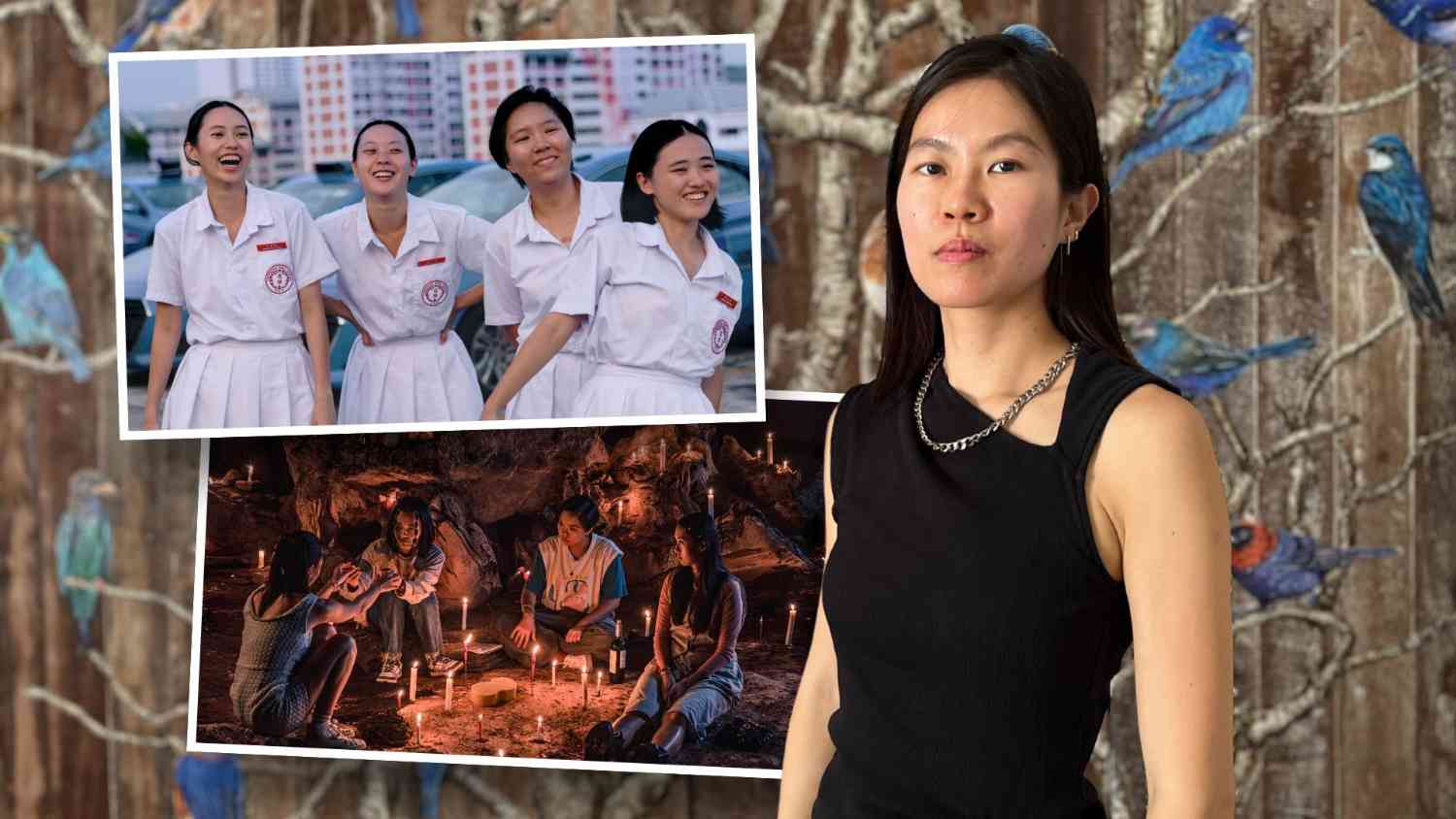
She Was The ‘Bad Student’ In School - Now Her Story Is Winning Film Festivals
Growing up, Tan Siyou couldn't follow the rules.
She skipped class to nap in the library, got kicked into the “bad” class, and watched her closest friendships dissolve after their “O” Levels. In the eyes of the school system, she was a problem. To herself, she was an amoeba – self-contained, floating silently and simply surviving.
Now in her late-thirties and based in the US, her short films have appeared at prestigious film festivals including Cannes, Toronto, and Berlinale. In her latest work, she’s channelled her experiences as a teenage student into “Amoeba”, her first feature film about four rebellious girls in an all-girls school.
Since its premiere at the Toronto International Film Festival last year, “Amoeba” has swept the international festival circuit, picking up the FIPRESCI Prize and Taiwan Film Critics Society Award at the Golden Horse Film Awards, Best Youth Film at the Asian Pacific Screen Awards, and Best Film at QCinema 2025.
Following a sold-out premiere at the Singapore International Film Festival last year, “Amoeba” arrives in local cinemas on 26 Mar 2026.
Siyou’s story will resonate this International Women’s Day (8 March), especially among women who have pushed against the grain. More than a coming-of-age story, Amoeba reckons with what Siyou thinks Singapore asks of its young women: To be obedient, domestically capable, marriage-bound, and excellent.
Ahead of the film’s release, she talked to us about female friendship, the cost of conformity, and why leaving Singapore may have been the more Singaporean thing she’s done.
Tell us about “Amoeba”.
“Amoeba” is about a group of girls in a [fictional] all-girls school in Singapore who want to form a gang. Something I grappled a lot with in the writing is what it means to be a gang in Singapore, and what is gang-hood, you know? Because when I did my research, it was very, very hard to find anything in Singapore about gangs and triads and all these things.
All I knew is that in the ’70s, [there were] these laws that were passed… detention without trial, all the gangsters were swooped up and eliminated. And so, it made me think about what it says about the history of Singapore, where unsavoury elements just disappear. In the modern world, what does it mean to be a gang when you cannot even sing a gang-like song?
Singapore is not Compton in LA. Singapore is not Brazil. Singapore is not… America. We don't do gang things. So what does it mean to be a gang in Singapore? The girls do things like take a nap [as a form of rebellion], and that's a gang.
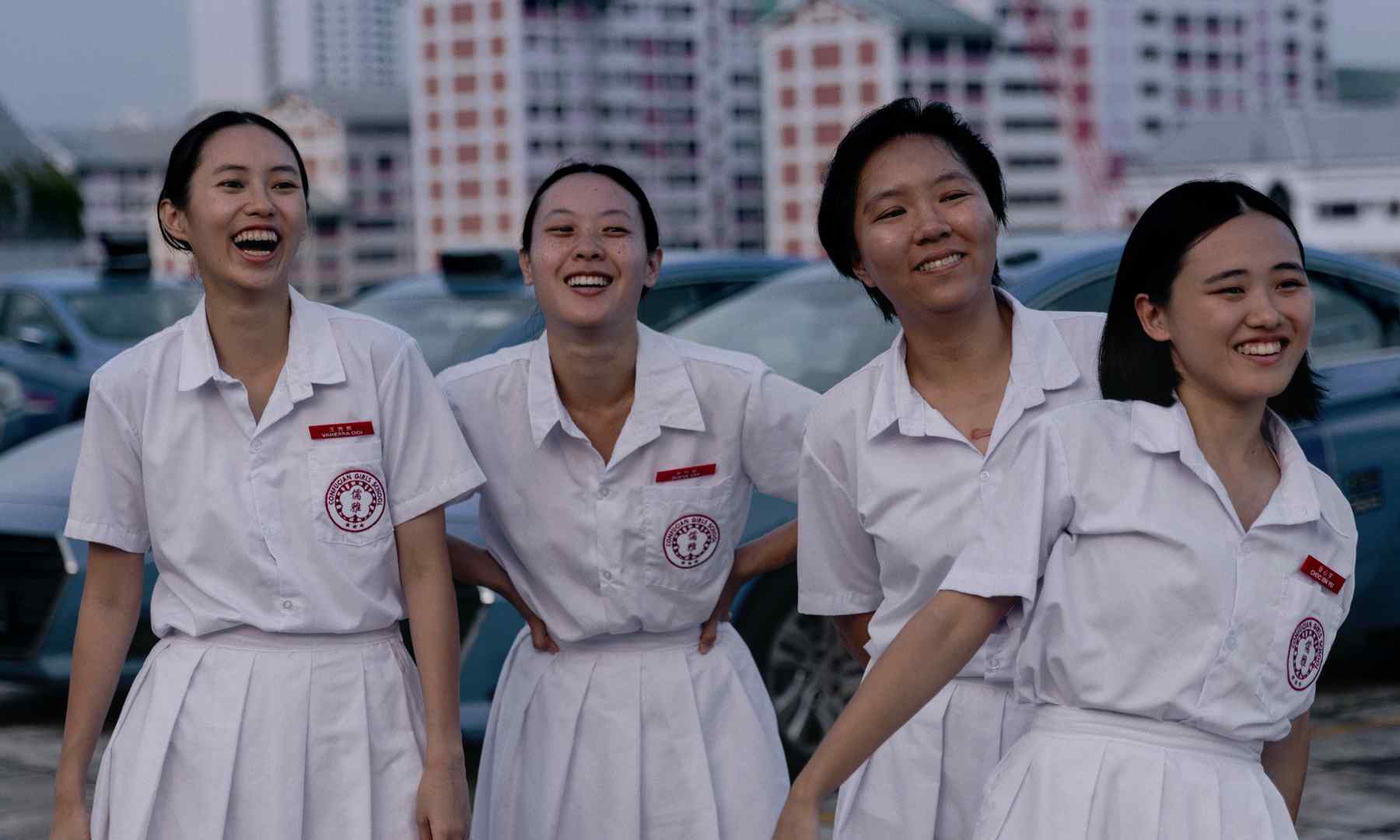 The cast of "Amoeba" (from left): Nicole Lee, Lim Shi-An, Genevieve Tan, and Ranice Tay. | IMAGE: JULIANA TAN @AKANGA FILM ASI
Why is the film called “Amoeba”?
It’s really because I went to a school that felt very oppressive and I had to survive in those years. I told myself: “I’m an amoeba”, because I learnt about it in biology and the image of this weird blob floating around in some kind of water seemed to reflect my state of mind, because I was very withdrawn.
To me, the amoeba felt like this bastion of self-sufficiency and independence. I wanted to explore something about this age of secondary school, first loves and separations.
Did making this film help you process your feelings from that time?
This feeling of being an amoeba fuelled the writing, the making of the film, the production, the actors… everything. I met other amoebas too! After reading the script, people came up to me to say, “I feel this too”.
And now, touring with the film, I’ve met people across the world, and they’ve shared with me that this is how they felt too. I’ve never seen a film that expresses this, so I feel that it’s less lonely. The film can speak to other unseen people in society, and I feel quite personally fulfilled.
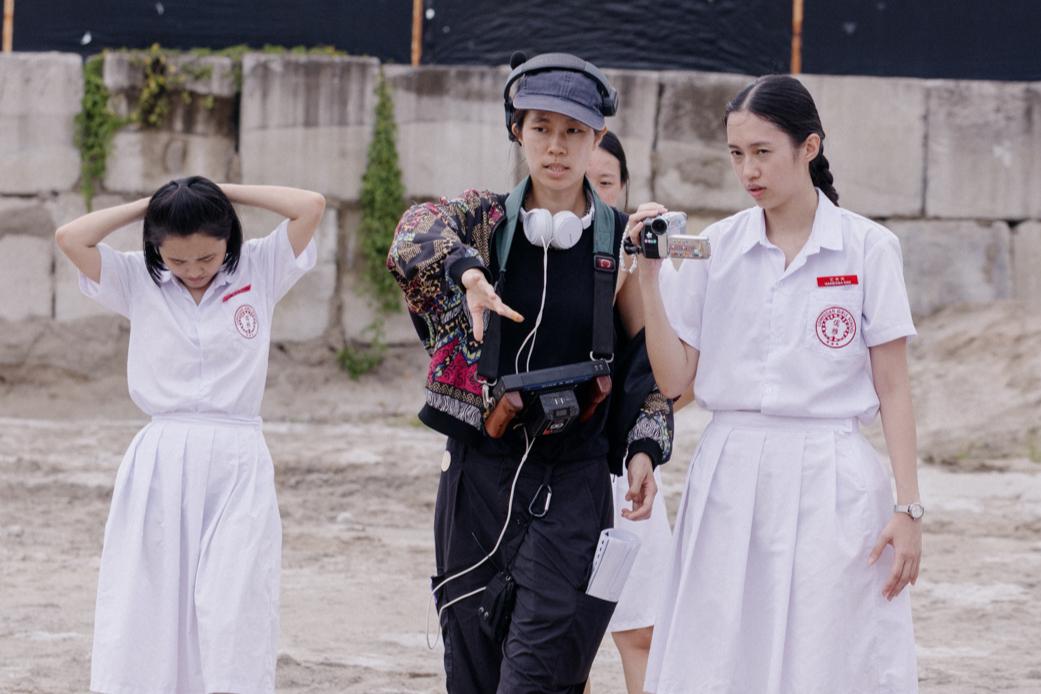 Director Tan Siyou (centre) on the set of "Amoeba" with actresses Ranice Tay (left), and Nicole Lee. | IMAGE: @AKANGA FILM ASIA
Did making this film dredge up memories of your own time in school and change the way you thought about those memories?
There were a lot of tears during the writing. There were so many memories that I’d forgotten about or suppressed. When you’re making a film, you open up to so many people and different experiences.
People bring in their own experiences. That was kind of cathartic because I didn’t feel so alone anymore. The process also made me see that it’s not really my fault that I was a bad student or rebellious.
If you were to time-travel in your mind right now, what is a core memory from secondary school that comes to mind?
So, in our school library, they decided to take out some shelves in one corner and put beanbags there. Of course, if you put beanbags there, you wanna lie down, right? Why put beanbags there if you don't want people to lie down? So my friends and I skipped class and went to sleep on the beanbags in the aircon. We were severely scolded and banned from the library.
Did that show up in “Amoeba”?
When I was investigating the film, I was like, why was it that my group of friends was treated as bad eggs? And I realised that these systems of control and morality seep into your friendships, and some people are just seen as bad. But why are we seen as bad? Because we wanted to lie down? It’s quite nice what. It's a very small example that made me think of what is seen as bad in the Singapore society and why. And why good is seen as productive, obedience, following and conformity.
 “Amoeba” is based on director Tan Siyou's secondary school experience. | IMAGE: JULIANA TAN @AKANGA FILM ASIA
So how did you draw from your personal experiences for this film?
The film is kind of personal in the sense that it's based on my secondary school experiences as a rebellious girl in an all-girls school. I think I drew from that a lot, from the things and the feelings I felt being labelled a “bad girl” or “black sheep”.
In Sec One and Sec Two, something snapped in my brain. I just could not follow the rules. I don't know why… it's not my fault. I think it might have had to do with puberty, and also, it was very pressurising, with exams and everything. I just felt that the rules were very stupid. Like, why must my skirt be exactly one centimetre above my knee? Does that help with my acquiring knowledge or understanding of the world?
I was kicked to a not-so-good class. And in that class, I met three other girls who were quite rebellious. We bonded not just by wanting to do naughty things. we also became real friends. And I remember that after our “O” Levels, we all chose different schools. And that was, I would say, my first heartbreak.
And so I wanted to channel that into the film because I feel that so many coming-of-age stories, books, films are about [romantic] love. But romance for me is about friendship. My friends are my loved ones. So I wanted to make a film about friendship.
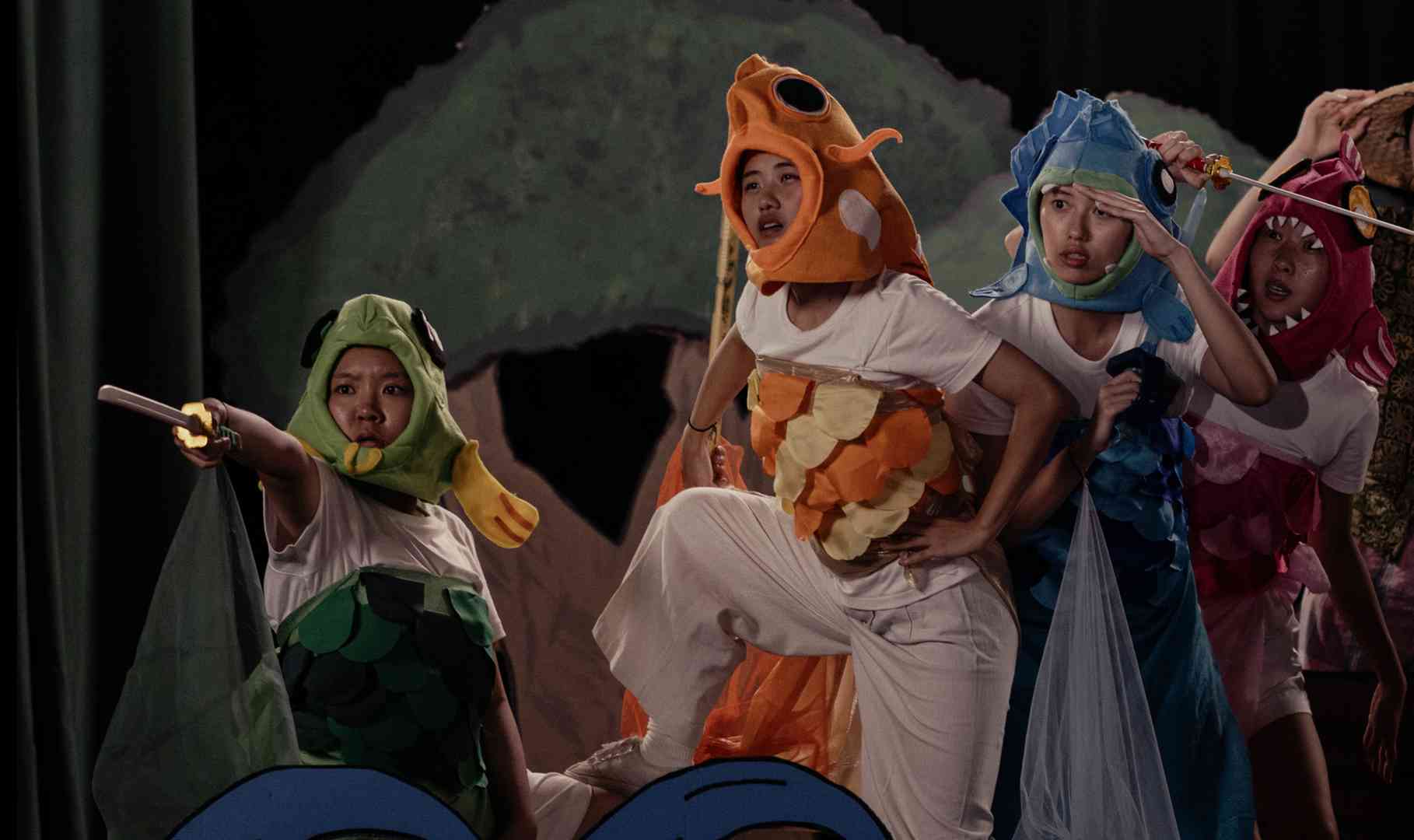
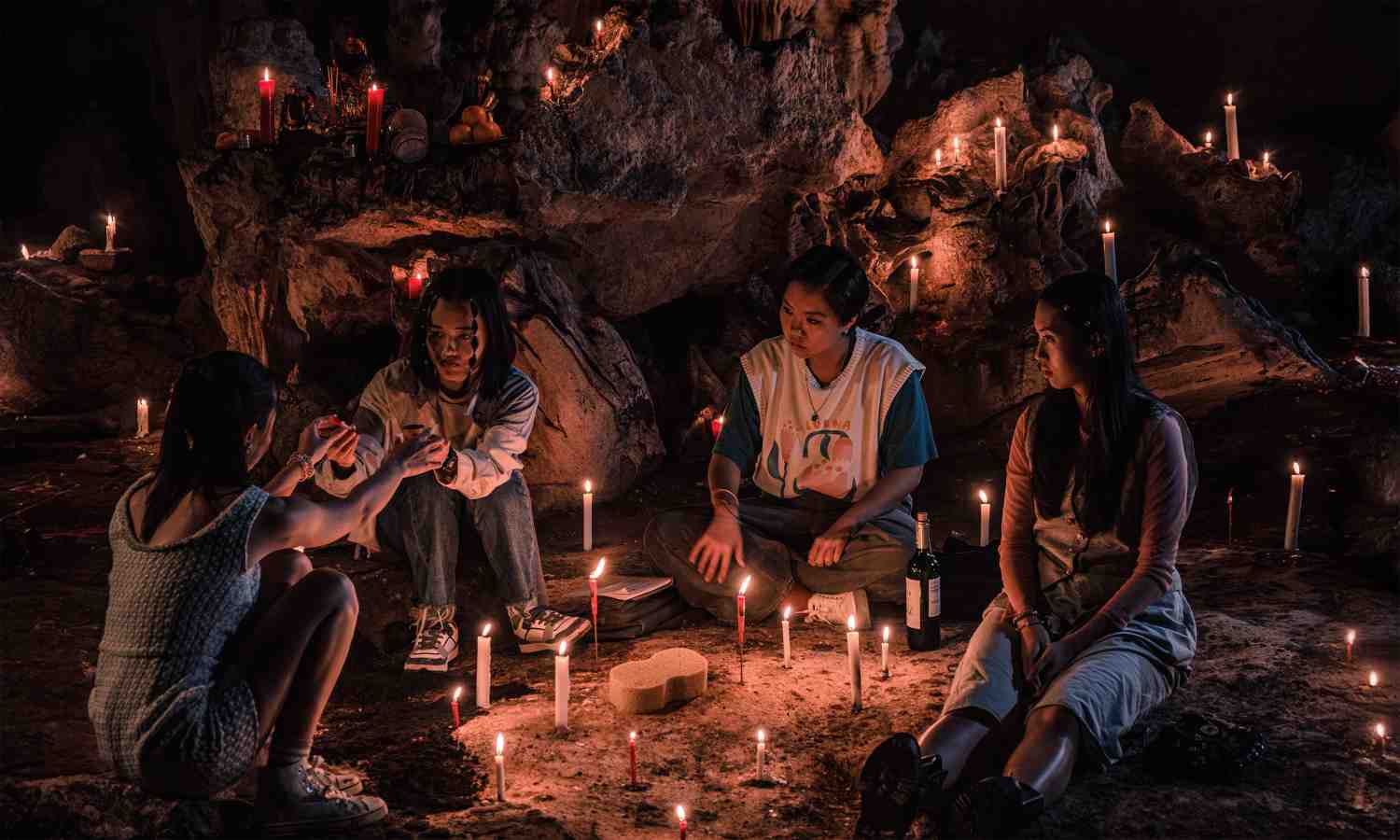 A scene from “Amoeba”. | IMAGE: POLO BOADO @AKANGA FILM ASIA
How is “Amoeba” different from other movies we’ve seen about schooling in the Singaporean education system?
What's different about it is that it's a film that centres on young girls, told from a primarily female point of view. And I think that point of view is extremely different from the other films because, as a woman in Singapore, you have to navigate so many other things.
You have to navigate a patriarchal society, and all these other pressures that people put on you. For example, during Chinese New Year, nobody asks me about my work. People always ask me, “Are you getting married? Do you have children? Have a child. Make babies.” Like, why do I need to make babies, right?!
So I think the experience, from a very young age, is completely different because not only do you have to deal with the fact that you have to grow up to become some respectable member of society with a good and high-paying job, you also have to deal with this other patriarchal nonsense. Like, you need to be good domestically, be a good wife, good mother… All these pressures feed into teenage pressures that are different.
The film is very real and raw. It's not a critique of the system; it’s just about four girls existing in this system and society, and what choices they each make.
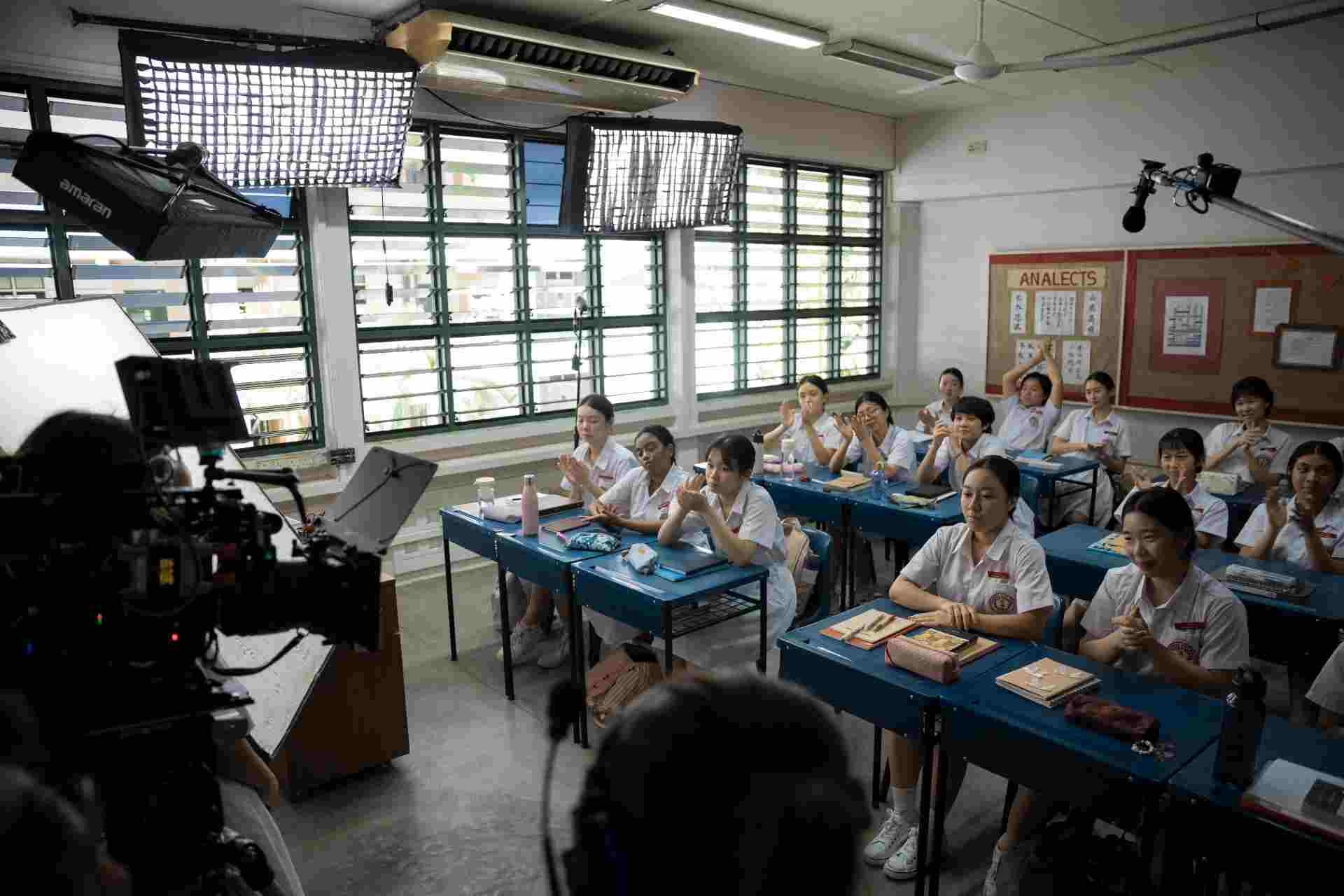 On the set of “Amoeba”. | IMAGE: CHRISTOPHER WONG @AKANGA FILM ASIA
Why did you decide to move overseas?
I went to the US for university. It felt like such a big decision then, but you know, at that age, everything is very dramatic. I was hanging out with my friend [from work], scooping ice cream, and she was like, “What are you gonna do? Where are you gonna go?” And I said, “I think if I stay in Singapore, I would probably have a good job, and kill myself at 40.” So I decided then, I think it’s better to go overseas.
Being overseas, of course, has its challenges. I didn’t think I would stay [overseas] because I never had the idea that I wanna live in America or whatever. (I’m a Singapore girl. I grew up here.) But after you graduate, you have this thing called OPT [Optional Practical Training) for one year. I found a job, and then I needed a work visa. I tried to apply [for one]. Everyone said, “No you won’t get this visa. It’s for bankers.” But whatever, I just try. And I got the visa.
Later, my boss said, “You wanna try for the Green Card?” So I just tried [and I got it]. One year became two, two years became five, which became 10. And that’s how I [ended up] staying in the US.
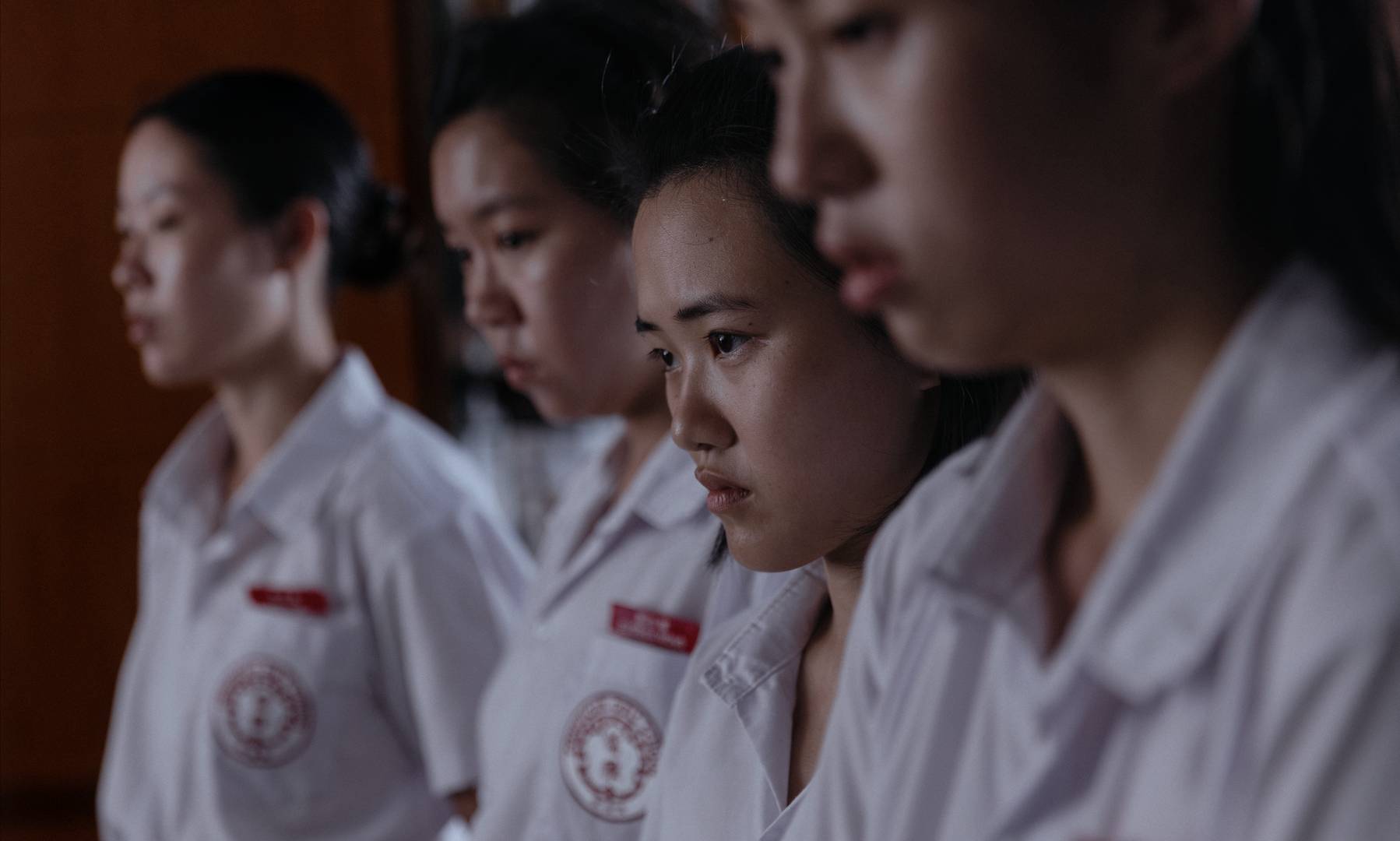 “It's not a critique of the system,” says director Tan Siyou. “It’s just about four girls existing in this system and society, and what choices they each make.” | IMAGE: JULIANA TAN @AKANGA FILM ASIA
How has living abroad shaped you as a Singaporean?
I don’t know. Maybe [I’ll explore that in] another film. I feel that I’m Singaporean. I just [happen to] live somewhere else. I don’t consider the US home even though I’ve lived there for longer than I have in Singapore. I’m very much a Singaporean abroad. But I think that’s a different sort of identity. You’re sort of in the middle because you’re not here and you’re not there, and it’s a very privileged position to be in because not everyone can do that.
The things I care about are every Singaporean. When I meet other people [in the US], I’m always very proud that I’m Singaporean, and I try to share with them that Singapore is not “Crazy Rich Asians”.
This is a very Singaporean question, but how do you make money as a filmmaker?
I don’t. I do random stuff – videography, photography… I’ve done a few commercials as a commercial director. Of course, along the way, I do a lot of freelance things. I’m also a bartender. I do a lot of F&B work in the US, where the hourly wage is actually liveable, unlike in Singapore. I just do random shit. Like, someone says, “Hey, I need a post-production supervisor”, and I say, “Sign me up!” Then I just learn on the job.
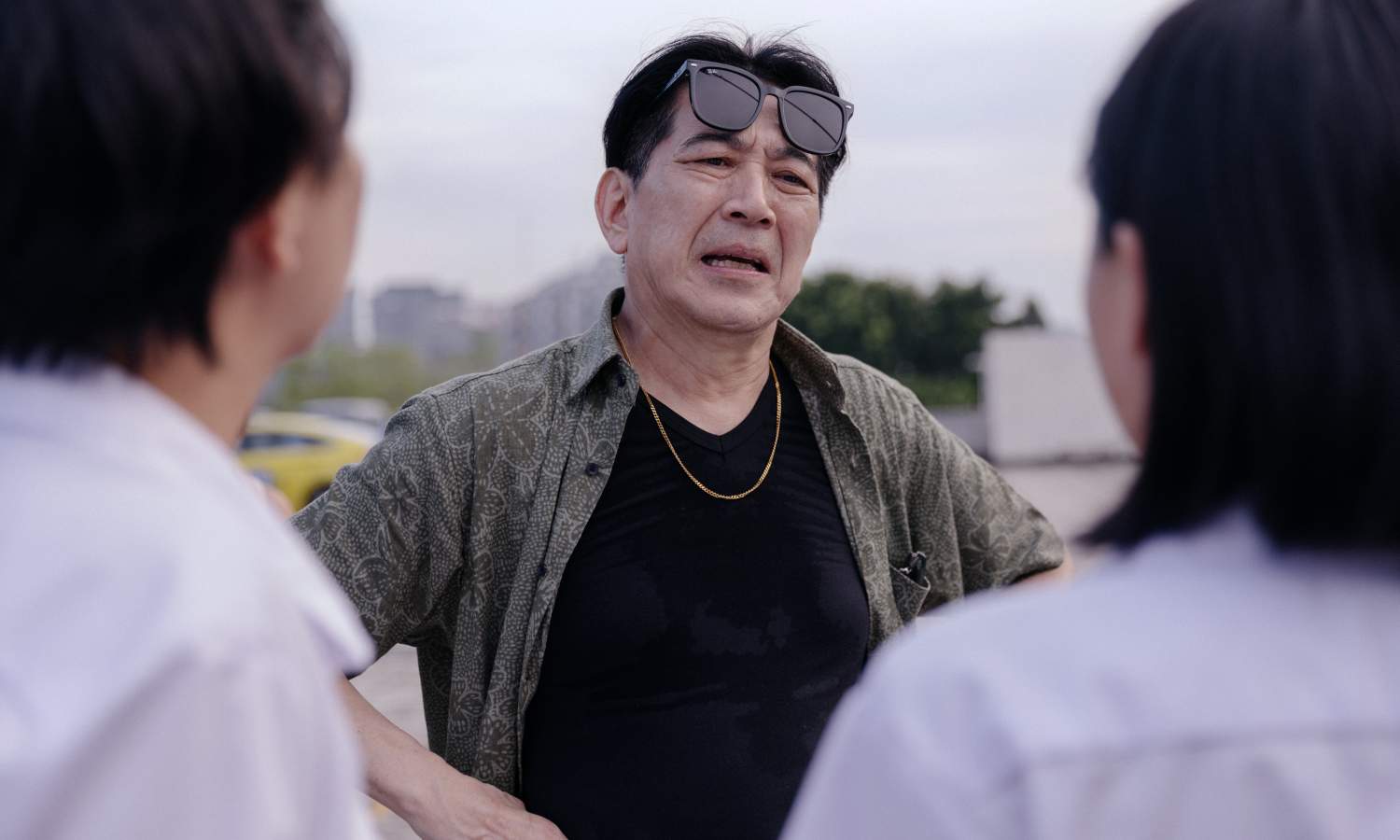 A scene from “Amoeba”. | IMAGE: JULIANA TAN @AKANGA FILM ASIA
Why should Singaporeans go watch “Amoeba”?
Hmm. I cannot ask them to watch “Amoeba”, but I think that everyone’s been through the school system here. I don’t think everyone had such a good time. So maybe watching it can make you reflect on that time, whether it was good or bad, or it’s been suppressed and you don’t want to think about it anymore.
[Perhaps you want to] remember the friendships of the time, which I feel are very intimate… I don’t know… I think maybe because school might seem so far away, and we might have forgotten the oppression we faced, but reflecting on that can maybe help us grow and become more evolved people.
For the latest updates on Wonderwall.sg, be sure to follow us on TikTok, Telegram, Instagram, and Facebook. If you have a story idea for us, email us at [email protected].