



From Spanish Dollars To SGD: The Rich History Of Money In Singapore
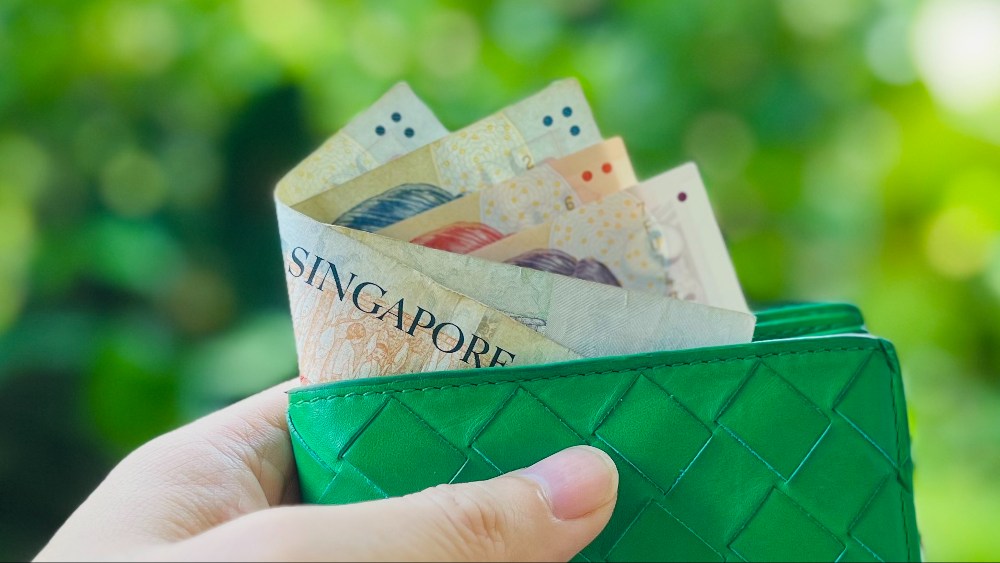
On this day (12 June) in 1967, Singapore introduced its very own dollar, marking a new chapter in our island's story. But before we got used to seeing Yusof Ishak in our wallets, Singapore had a colourful currency past, from ancient Chinese coins to Spanish dollars. Each type of money tells a tale of our transformation from a vibrant trading post to a bustling modern city.
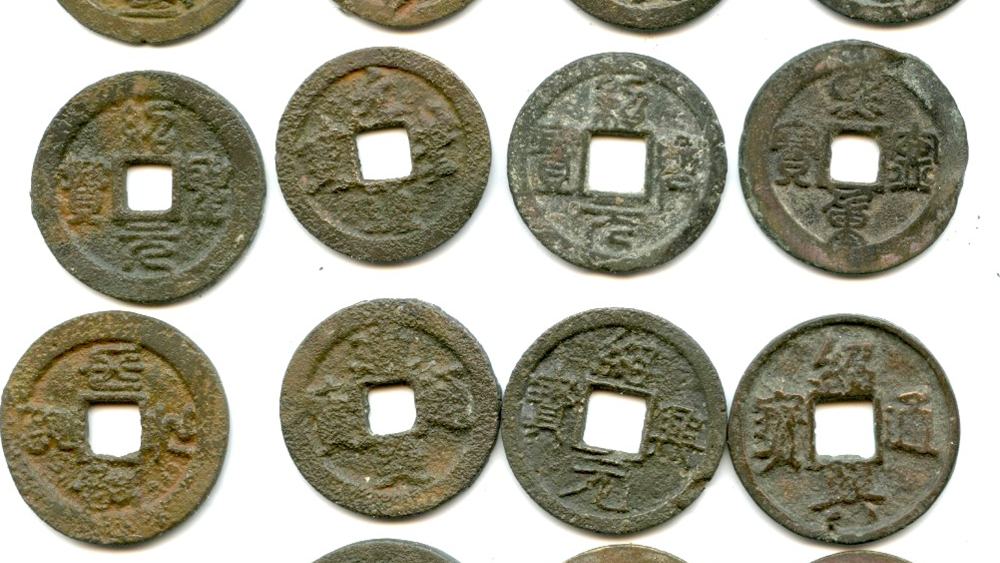 IMAGE: SCOTT SEMANS WORLD COINS (COINCOIN.COM), VIA WIKIMEDIA COMMONS
Chinese coins
Picture this: It’s the 14th century, and Singapore is a bustling port known as Temasek. Traders are everywhere, and they are using Chinese coins. Archaeologists date these coins to the Northern Song Dynasty (960–1126/1127).
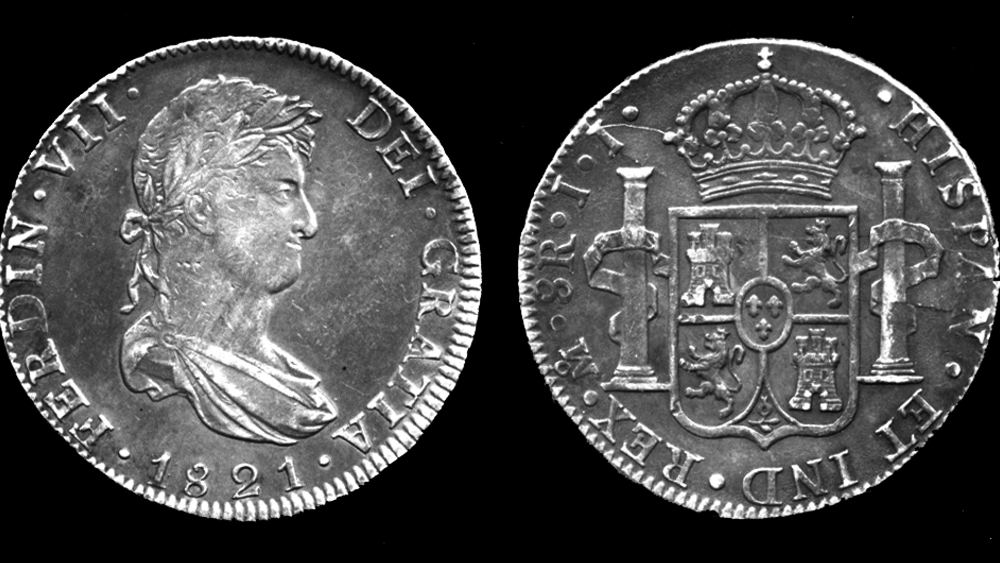 IMAGE: WIKIMEDIA COMMONS
Spanish dollars
Fast forward to 1819, when the British established a trading settlement in Singapore. A mix of currencies were used at the time, such as Indian rupees, and Dutch guilders. But the Spanish silver dollar quickly became the dominant currency. To simplify transactions, John Crawfurd, the Resident of Singapore, made it the official currency in 1823.
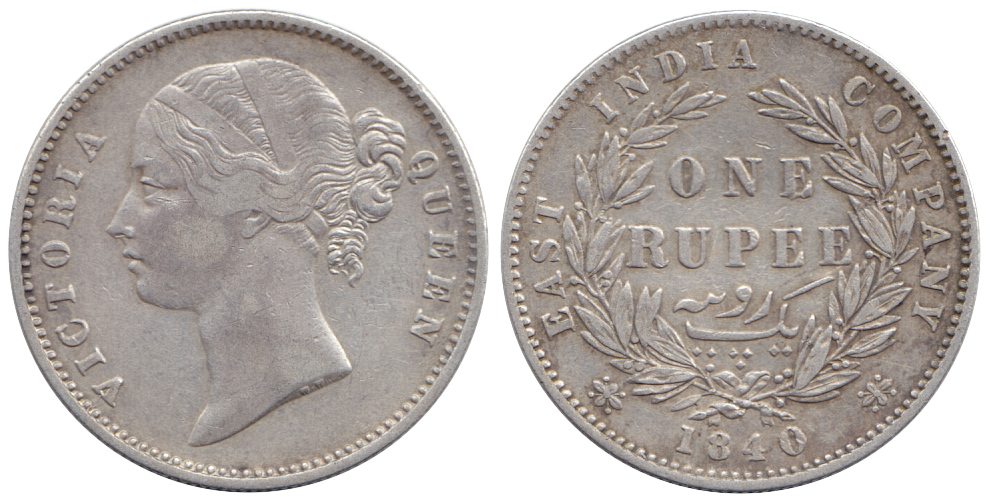 IMAGE: WIKIMEDIA COMMONS
Indian rupees
In 1826, Singapore joined the Straits Settlements, and the Brits pushed for the Indian rupee as the official currency. But the Spanish dollar, now called the Mexican dollar, remained popular locally. This led to some serious currency confusion – official accounts were in rupees, but daily transactions were in dollars.
 IMAGE: OSAMA SHUKIR MUHAMMED AMIN FRCP(GLASG), VIA WIKIMEDIA COMMONS
Silver dollars to bank notes
By 1867, the Straits Settlements were under London’s control. They abolished the legal tender status of the Indian rupee, and instead, Mexican, Hong Kong, Spanish, Peruvian and Bolivian silver dollars were recognised as legal tender currencies. By 1874, the Japanese yen and American trade dollar were also legal. But supply was very limited.
Commercial banks issued their own notes to supplement the limited supply of silver dollars. In 1849, the Oriental Bank issued the first bank notes in Singapore in denominations of $5, $10, $25, $50, $100 and $500. The British eventually minted their own currency notes for the Straits Settlements by 1899.
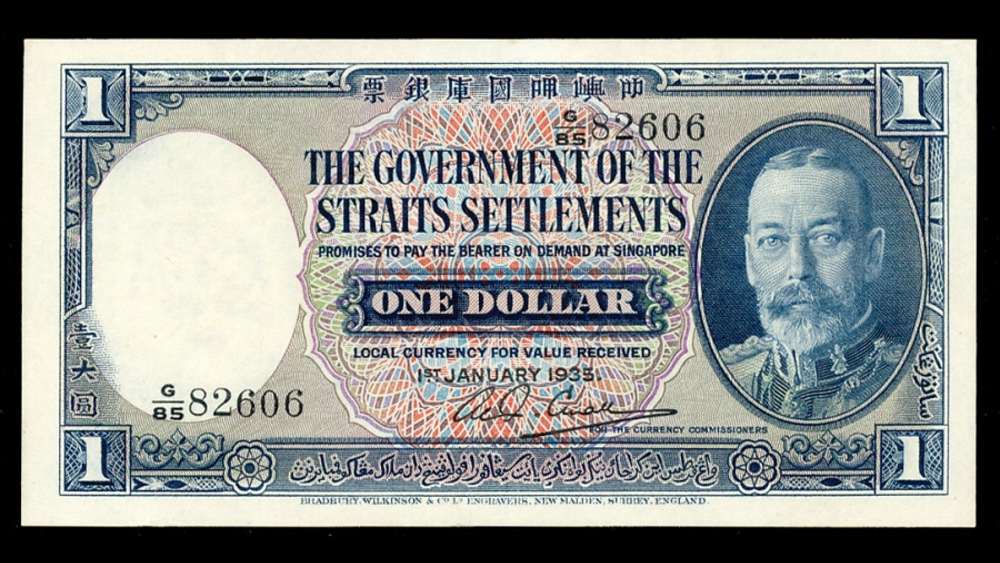 IMAGE: WIKIMEDIA COMMONS
The Straits Dollar comes into play
In 1903, the Straits dollar made its debut, while the British, Mexican and other silver dollars were demonetised. The Straits dollar was pegged to the British sterling and stuck around until World War II.
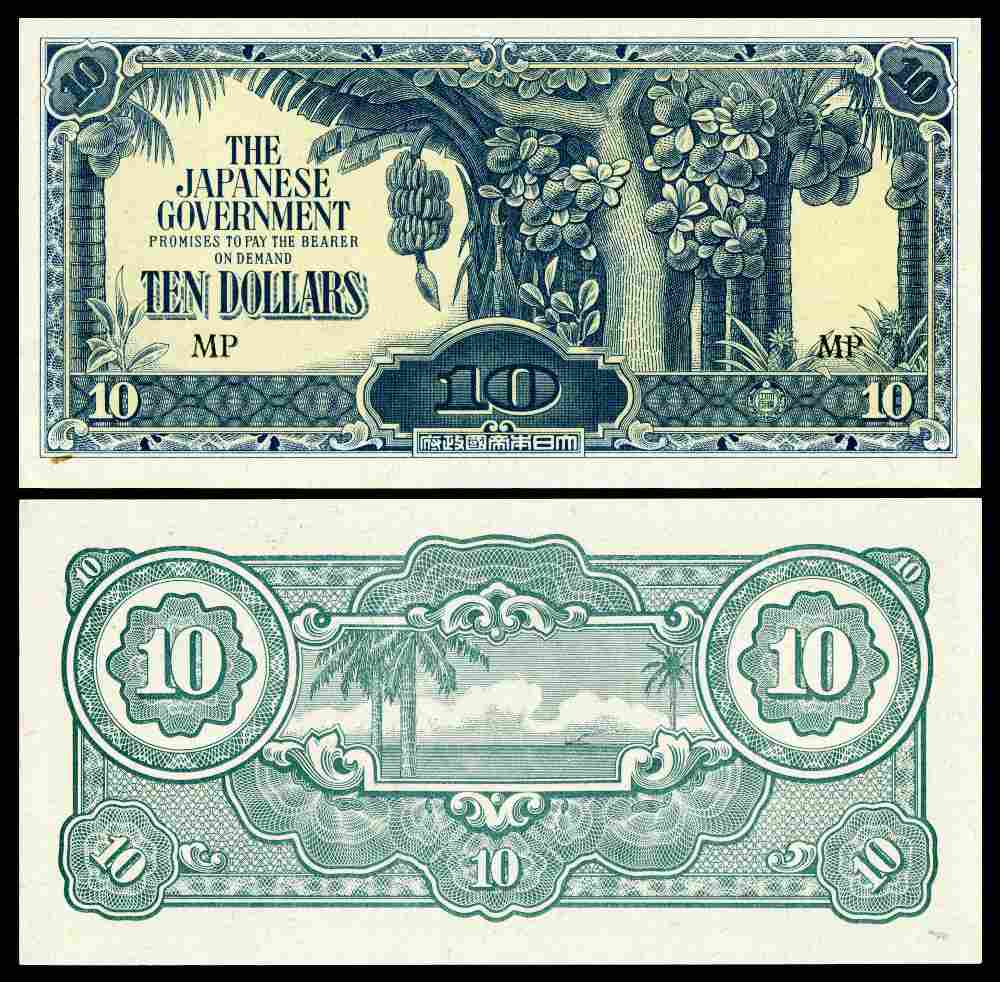 IMAGE: NATIONAL NUMISMATIC COLLECTION, NATIONAL MUSEUM OF AMERICAN HISTORY AT THE SMITHSONIAN INSTITUTION VIA WIKIMEDIA COMMONS
Malayan Dollar and “banana money”
In 1940, the Malayan dollar was born, uniting Malaya and the Straits Settlements’ currencies. In 1942, when the Japanese military invaded, they introduced the military yen or “banana money” – named because it featured a banana plant, but it became worthless because of oversupply. Post-war, the Malayan dollar made a comeback.
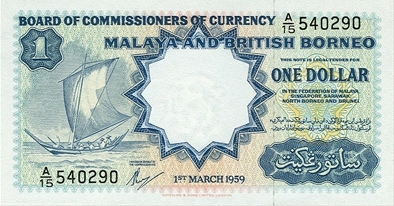 IMAGE: CHIANGKAISHEKTWNROC VIA WIKIMEDIA COMMONS
Malaya and British Borneo Dollar
In 1954, the Malayan dollar became the Malaya and British Borneo dollar, used across Singapore, Malaya, North Borneo, Sarawak, and Brunei. Post-independence in 1965, Singapore planned a shared currency with Malaysia, but when that didn’t pan out, the Singapore dollar was born.
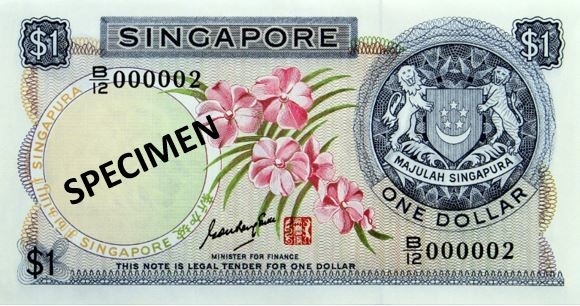 IMAGE: MONETARY AUTHORITY OF SINGAPORE
Singapore Dollar
Singapore finally introduced its very own dollar on 12 June 1967 – two years after gaining independence! Initially pegged to the British sterling, it switched to the US dollar after the sterling’s devaluation. Now, Singapore uses a managed float system, aligning its dollar with a basket of major trading partners’ currencies.
Fun facts! Did you know that Singapore, Malaysia and Brunei all issued their own currencies on the same day? They also adopted a system of free interchangeability, meaning one Singapore dollar = one Malaysian ringgit = one Brunei dollar. Malaysia opted out of this agreement in 1973, but Brunei and Singapore have continued this agreement till the present day. So you can use SGD in Brunei, and your Brunei friends can pay with Brunei dollars here!
Also, did you know that in 2013, our coins were finalists for the Best New Circulation Coin or Series at the Currency Awards by the International Association of Currency Affairs (IACA) that year? Yes, that’s a thing.
And though the 1-cent coins were discontinued on 1 April 2002 (not a joke!), those in circulation are still legal tender – but good luck finding anyone who’ll accept them.
For other cool facts about Singapore money, read our piece "New LKY $10 Coin, Notes With National Anthem And Other Interesting Facts About Singapore Money".
For the latest updates on Wonderwall.sg, be sure to follow us on TikTok, Telegram, Instagram, and Facebook. If you have a story idea for us, email us at [email protected].